Average Height for a 14-Year-Old Boy: Is Your Son On Track?
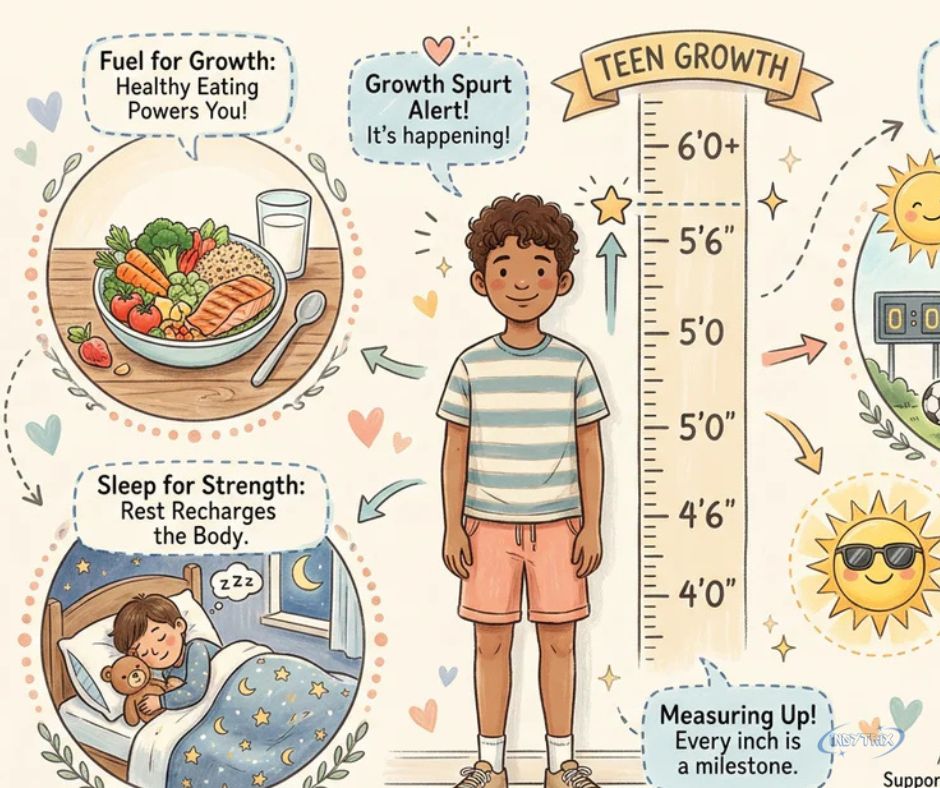
Understanding the Average Height for a 14-Year-Old Boy helps parents and teens track healthy growth during puberty. At this age, boys experience rapid physical development, but growth rates can vary depending on genetics, nutrition, sleep, and overall health. While some 14-year-old boys may already be close to their adult height, others may still have significant growth ahead.
Comparing height with standard growth charts can provide a useful reference, but every teenager develops at a different pace. In this guide, you’ll learn what is considered a normal height, the factors that influence growth, and when it may be a good idea to consult a healthcare professional about growth charts, puberty, healthy development, teen growth, and height percentile.
What Is the Average Height for a 14-Year-Old Boy?
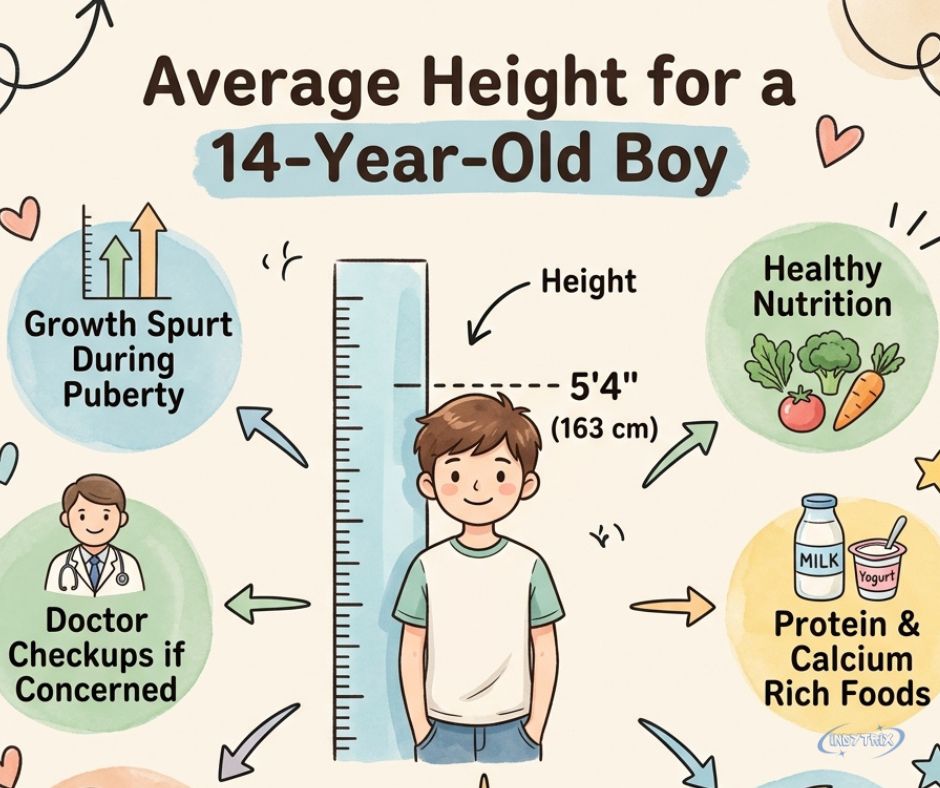
The average height for a 14-year-old boy in the United States sits close to 5 feet 4 inches, or about 163 centimeters. This number comes from data tracked by the CDC (Centers for Disease Control) and supported by the WHO (World Health Organization). Most boys this age fall somewhere between 5 feet and 5 feet 5 inches, which covers a wide and healthy range.
A single number never tells the whole story, though. Height in cm and feet for 14-year-old boy measurements vary based on genetics, diet, and timing of puberty. Any pediatrician will confirm that a boy slightly below or above this average is usually still growing exactly as he should.
Average Height for a 14-Year-Old Boy by Percentile
Doctors rarely stop at one average number. They use a height percentile calculator to see exactly where a boy stands compared to thousands of others his age. This method, based on the boys growth chart published by the CDC, gives a much fuller picture than a single measurement ever could.
Percentile ranking works on a simple idea. A boy at the 50th percentile is right in the middle of his peer group. One at the 90th percentile is taller than 90 percent of boys his age. The table below breaks this down clearly, and it forms the basis for what doctors call the growth chart percentile explained in simple terms.
| Percentile | Approximate Height |
| 10th | 5’0″ (152 cm) |
| 25th | 5’2″ (157 cm) |
| 50th | 5’4″ (163 cm) |
| 75th | 5’6″ (168 cm) |
| 90th | 5’8″ (173 cm) |
What Does “Average” Actually Mean?
The word “average” confuses more parents than it helps. It does not mean ideal, and it does not mean required. It simply reflects a standard deviation calculated from a large group of boys measured at the same age.
Half of every group falls below the middle point, and that is expected by design. A boy’s age-appropriate development should be judged against his own pattern over time, not against a single classmate or cousin. Comparing him to one friend tells you almost nothing useful.
Average Height by Age for Boys (11 to 17 Years)
Growth rarely moves in a straight line. It comes in short bursts followed by quieter stretches, which is exactly why a height chart for boys across several years matters more than any single snapshot. Fourteen sits right in the middle of the most active stretch of the entire teenage journey.
Looking at the full range from 11 to 17 shows just how much teenage growth patterns shift year by year. The table below traces that growth trajectory clearly, and it also shows why the normal height range for teens widens the older a boy gets.
| Age | Average Height |
| 11 | 4’8″ (142 cm) |
| 12 | 4’11” (150 cm) |
| 13 | 5’1″ (156 cm) |
| 14 | 5’4″ (163 cm) |
| 15 | 5’7″ (170 cm) |
| 16 | 5’8″ (173 cm) |
| 17 | 5’9″ (175 cm) |
Factors That Affect a Teenage Boy’s Height
Height is never decided by one single cause. Factors affecting height blend together over many years, starting with genetic height prediction passed down from both parents. A rough estimate can be found using the mid-parental height formula, which averages the mother’s and father’s height together.
Beyond genes, daily habits matter just as much. Nutrition for teen growth plays a huge role, especially protein intake for teenagers and enough vitamin D and height support through sunlight or food. Sleep and growth hormone release are closely linked, since most growth happens during deep sleep. Calcium for bone growth strengthens the skeleton, while regular exercise for height growth keeps the whole system working properly. Every family height pattern sets a baseline, but daily choices still shape the final result.
When Do Boys Have Their Growth Spurt?
Most boys experience their steepest puberty growth spurt between the ages of 12 and 15. This period, known for reaching peak height velocity, is when a boy might grow four inches or more within a single year. It usually follows the first visible signs of puberty by several months.
Doctors sometimes track this using the Tanner Stages, a system that maps puberty onset and later adolescent development stages. Some boys show delayed puberty in boys patterns and start growing later than friends, while a smaller number show precocious puberty, starting earlier than expected. Both patterns fall within a wide range of normal, though a doctor can confirm this through simple observation.
How to Tell If Your Son’s Growth Is On Track
Consistency matters far more than any single measurement. A height and weight chart for 14-year-old boys, tracked yearly, shows whether his personal growth trajectory stays smooth and steady. A steady curve, even below average, usually means everything is working exactly as it should.
Annual visits give a pediatrician the chance to plot new numbers using a height growth calculator and compare them to past results. Weight matters here too, often measured alongside BMI (Body Mass Index), since height and weight typically rise together during healthy development.
When Should You Be Concerned About Your Son’s Height?
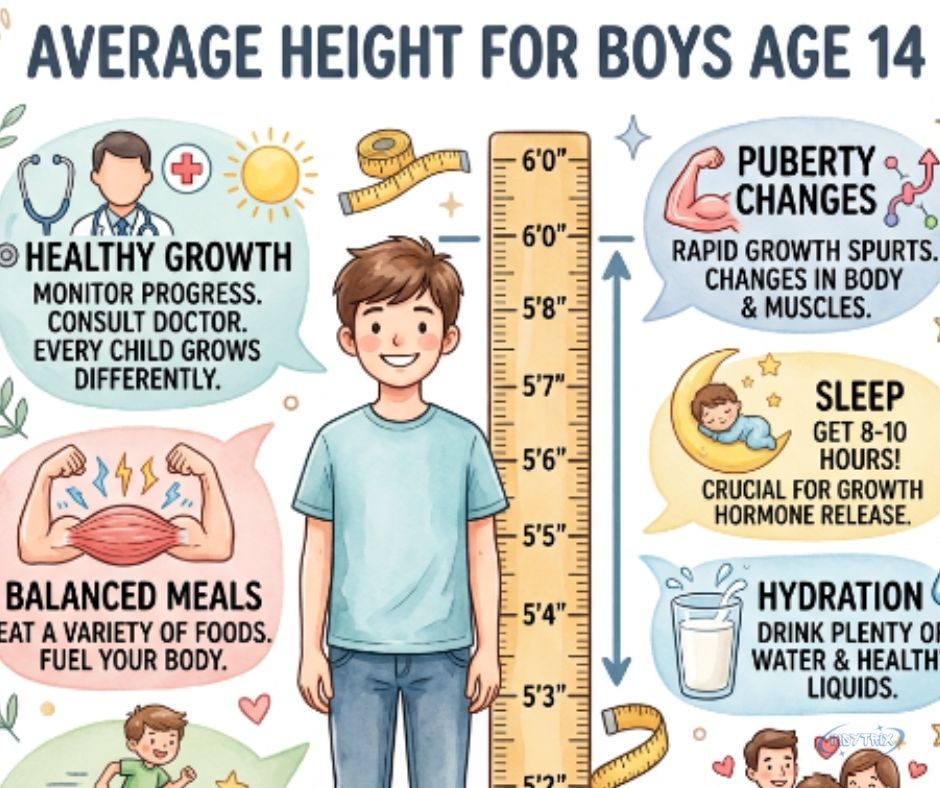
A few warning signs deserve real attention. A sudden drop across percentile lines, or several months with almost no growth, could point toward short stature in children or an early sign of growth plates closing too soon. These situations are uncommon, but they are worth mentioning to a doctor early rather than waiting.
A pediatric endocrinologist can run tests to rule out growth hormone deficiency, one of several stunted growth causes that affect a small percentage of teens. Treatment sometimes involves growth hormone therapy using HGH (Human Growth Hormone), guided closely by changes within the endocrine system. Catching these issues early gives the best possible outcome.
How to Support Healthy Growth in Teenage Boys
Small daily habits add up to real results over time. Solid nutrition for teen growth starts with protein-rich meals, dairy for calcium for bone growth, and foods that help height growth like eggs, leafy greens, and fortified cereals. Sunlight exposure or supplements support vitamin D and height development, especially during darker winter months.
Sleep deserves just as much focus as food. Deep, uninterrupted rest triggers the strongest sleep and growth hormone release each night. Pairing that with regular physical activity, especially sports involving jumping or running, keeps exercise for height growth working in a boy’s favor rather than against it.
Frequently Asked Questions
Is my son’s height normal for his age?
Yes, almost certainly, as long as he tracks steadily along his own curve rather than dropping suddenly.
How tall should a 14-year-old be?
Most fall between 5 feet and 5 feet 5 inches, though the full normal range stretches wider than that.
Will my son grow taller after 14?
Nearly always, since most boys still have several years of growth left before their growth plates closing fully.
What is a healthy height for a teenage boy?
Any height within the broad percentile range counts as healthy, especially when paired with steady skeletal maturity.
How much do boys grow in a year?
During the growth spurt years, two to four inches annually is common and expected.

Welcome to Insytrix I’ m Habib Saleem, an AI-Powered SEO, and content writer with 3 years of experience.I help websites rank higher, grow traffic, and look amazing. My goal is to make SEO and web design simple and effective for everyone. Let’s achieve more together!














Post Comment