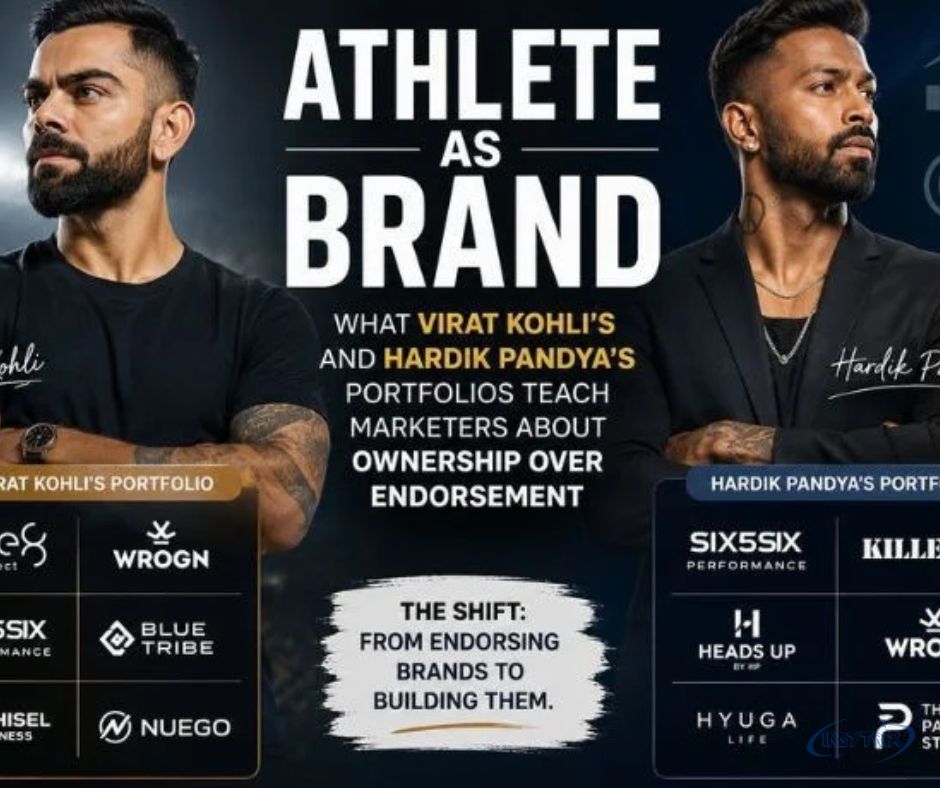
Athlete as Brand: What Virat Kohli’s and Hardik Pandya’s Portfolios Teach Marketers About Ownership Over Endorsement
Sports marketing is entering a new era. For decades, brands simply paid a famous face to sell a product, but that era is fading fast. Today’s top athletes are not content with a paycheck; they want real equity ownership in what they promote. This shift, often called athlete as brand, has turned stars into founders, investors, and business partners rather than rented faces.
Virat Kohli and Hardik Pandya show this change clearly, each building a different kind of brand portfolio through smart startup investments and long-term thinking. Understanding their choices reveals why ownership over endorsement is quickly becoming the smarter, more trusted path in modern sports business.
The Rise of Athletes as Independent Brands
For a long time, celebrity endorsements followed one simple pattern. A brand paid an athlete to appear in ads. The athlete had no stake in the company. Once the contract ended, the relationship ended too. This model still works for short campaigns, but it rarely builds lasting brand equity for either side.
Today, more athletes want a different deal. They want equity ownership, not just a paycheck. This is not only happening in cricket. Around the world, stars like LeBron James and Serena Williams have built real companies through equity investment and venture investments. The rise of the creator economy and easy-to-launch direct-to-consumer brands made this shift possible. Athletes no longer need a huge company to sell products. They can build their own consumer brands directly, using social media and online stores. This is the setting where Kohli and Pandya built their very different approaches.
From Face-of-the-Brand to Founder-of-the-Brand
Think of it like renting an apartment versus owning the building. An endorsement deal is a rental. It pays well, but it ends. Business ownership is different. The athlete becomes a co-founder who shares in the wins and losses. This single idea explains almost everything in this article.
Virat Kohli’s Brand Portfolio and Strategic Shift
Virat Kohli’s business ventures show one of the boldest bets in Indian sports history. Kohli walked away from a long Puma partnership and chose to build something of his own instead. He made a personal equity investment of around ₹40 crore into Virat Kohli Agilitas Sports, the company founded by former Puma India head Abhishek Ganguly. This deal placed Virat Kohli One8 brand fully under Agilitas control, turning a lifestyle label into an independent sportswear company with its own footwear, apparel, and retail stores.
His investment portfolio does not stop there. Kohli also holds a stake in WROGN, a fashion label under Universal Sportsbiz. He co-invested in Blue Tribe, a plant-based food startup, alongside his wife Anushka Sharma. His Virat Kohli Rage Coffee investment backed a fast-growing direct-to-consumer coffee brand. He owns Virat Kohli FC Goa ownership at 12 percent, giving him a stake in Indian football. His Virat Kohli Go Digit investment paid off strongly after the insurance company’s public listing. He also races through Team Blue Rising, an electric powerboat team, and runs hospitality projects like One8 Commune and Nueva restaurant. The table below shows the spread of his brand portfolio.
| Brand or Venture | Category | Ownership Type |
| One8 (via Agilitas Sports) | Sportswear, footwear | Owned / Equity |
| WROGN | Fashion | Owned / Equity |
| Go Digit Insurance | Fintech, insurance | Investment |
| Blue Tribe | Plant-based food | Investment |
| Rage Coffee | D2C coffee | Investment |
| FC Goa | Sports franchise | 12% Ownership |
| Team Blue Rising | Motorsport | Co-ownership |
| Nueva, One8 Commune | Hospitality | Owned |
According to Kroll’s 2025 rankings, Kohli remains India’s most valuable celebrity brand, worth roughly $231 million. This proves something important. Building business ownership did not weaken his endorsement value. It made his personal brand stronger and more trusted.
Hardik Pandya’s Focused Brand and Investment Approach
Hardik Pandya’s investment portfolio looks very different from Kohli’s. Instead of building one flagship label, Pandya has taken a smaller, more selective route into startup investments. This is a valid ownership model too, just built on a different level of risk and focus.
His most notable move is the Hardik Pandya equity investment in Yu Foodlabs, a direct-to-consumer packaged food startup. He joined as both an investor and brand ambassador, describing his stake as “a minority investment… with the objective of creating long-term value.” He also holds equity in Hardik Pandya The Souled Store, a popular fashion and merchandise brand, along with smaller angel bets in fintech names like LendenClub and Aretto. Unlike Kohli, Pandya’s public image leans more toward lifestyle display, including a well-known collection of luxury watches and cars, rather than building a namesake consumer label. This makes his approach a lighter, lower-effort form of athlete entrepreneurship, useful for marketers who want a simpler, faster case study.
Ownership vs Endorsement: Understanding the Key Difference
A normal endorsement deal is simple. The brand pays a fee. The athlete appears in ads for a set time. There is no long-term upside for the athlete beyond that fee, and no risk either. This structure is fast and predictable, which is why it remains common in sports marketing.
Brand ownership, on the other hand, ties the athlete’s financial future to the company itself. This is the real meaning of ownership over endorsement. The athlete gains a real equity stake, sometimes even a voice in strategy, and the reward grows or shrinks with the business. This difference changes how a partnership feels to the public too. Fans can sense when a star actually owns what they promote. That sense of truth builds real consumer trust, something a rented endorsement rarely achieves.
| Factor | Endorsement Deal | Ownership Model |
| Control | Low | High |
| Financial Upside | Fixed fee | Tied to company performance |
| Risk | None for athlete | Shared with founders |
| Longevity | Short-term | Long-term |
| Brand Authenticity | Moderate | Strong |
A Quick Analogy for Marketers
An endorsement is like hiring a spokesperson for one season. Ownership is like adding a co-founder who never really leaves, even after the contract date passes.
Comparing Virat Kohli and Hardik Pandya’s Brand Strategies
Placed side by side, these two athletes show two clear paths inside modern sports business. Kohli built wide. His brand portfolio spans fashion, food, insurance, sports franchises, and hospitality. This wide spread demands huge time and energy, but it also builds deep long-term brand value across many industries at once.
Pandya built narrow. His investment strategy favors fewer bets, smaller equity partnerships, and less public operational load. Marketers can borrow a simple framework from this comparison. Call Kohli’s style the “Builder” model, where the athlete drives brand creation directly. Call Pandya’s style the “Backer” model, where the athlete supports someone else’s brand through equity participation. Both are valid, but they suit different campaign goals and different levels of athlete involvement.
| Metric | Virat Kohli | Hardik Pandya |
| Number of Ventures | 10+ | 3-4 |
| Flagship Owned Brand | One8 | The Souled Store (stake) |
| Strategy Type | Builder | Backer |
| Sector Spread | Wide | Narrow |
Why Modern Marketers Should Pay Attention
American audiences, especially younger consumers, are growing tired of obvious paid promotion. Gen Z and millennial buyers often scroll past a typical ad, but they pay closer attention when a personal brand feels real. This shift matters directly to marketing strategy teams building future campaigns.
This is where the athlete as brand idea earns real value for marketers. An athlete who already holds an equity stake somewhere else has proven commercial judgment. Their choices are not random. They reflect real testing in the startup ecosystem, not just a marketing decision made by an agent. Choosing a partner with this kind of track record lowers risk and raises the odds of a campaign that actually lasts.
Key Marketing Lessons from Athlete-Owned Brands
The Kohli and Pandya cases teach several clear lessons for any brand thinking about a founder-led athlete partnership. Category fit matters more than fame alone. Kohli’s fitness and nutrition ventures work because they mirror his public image of discipline, which is a strong example of performance branding done right. A mismatch between an athlete’s public story and the product category almost always weakens trust.
Equity partnerships also outperform one-time campaigns for long-term storytelling, since the athlete keeps a reason to promote the brand long after any contract ends. Brands should study an athlete’s full investment portfolio, not just the single product on offer, because reputational risk can spread quickly between ventures. Smaller, selective investments, closer to the Pandya model, can also give challenger brands a lower-cost path to build brand authenticity without needing a full equity-based endorsement structure.
Future Trends in Athlete Branding and Ownership
The direction of travel is clear. More deals are shifting from flat fees toward equity-based endorsements, giving athletes a real reason to stay engaged past the launch date. This trend is already visible in the United States, where several retired and active athletes now run their own small venture funds focused on early-stage investment opportunities.
Cheaper manufacturing tools and faster online store platforms are also lowering the cost of launching a new label. This means more athletes will likely follow the athlete-led businesses path in coming years, not fewer. As the financial upside of ownership becomes common knowledge among top-tier talent, expect the “Builder” model to grow well beyond cricket and into every major global sport.
Common Mistakes Brands Make When Choosing Celebrity Partnerships
Many marketing teams still make avoidable errors when picking an athlete for a deal. The table below lists the most common mistakes and a simple fix for each one.
| Mistake | Simple Fix |
| Chasing follower count over category fit | Match the athlete’s public story to the product |
| Skipping research on existing ventures | Review the athlete’s full brand portfolio first |
| Using only short royalty deals | Consider a revenue-share or equity structure |
| Ignoring audience mismatch | Check if the athlete’s own audience matches your buyer |
| No exit or risk clause | Build reputational-risk terms into the contract |
Careful due diligence on an athlete’s public and business life protects a brand’s own reputation. A single bad venture connected to a partner can quietly damage years of careful brand collaboration work.
Final Thoughts
Virat Kohli and Hardik Pandya show two working paths inside modern athlete branding. One builds wide, owns deeply, and treats every venture as a piece of one larger lifestyle story. The other stays focused, picks fewer bets, and protects personal bandwidth while still gaining real wealth creation through smart startup investments.
Both paths prove the same core point for marketers everywhere. The future of sports marketing trends favors partners who think like founders, not just faces for a camera. Choosing ownership over endorsement is no longer a rare bet. It is fast becoming the smarter, more trusted way to build a lasting marketing strategy around real people with real skin in the game.

Welcome to Insytrix I’ m Habib Saleem, an AI-Powered SEO, and content writer with 3 years of experience.I help websites rank higher, grow traffic, and look amazing. My goal is to make SEO and web design simple and effective for everyone. Let’s achieve more together!








Post Comment