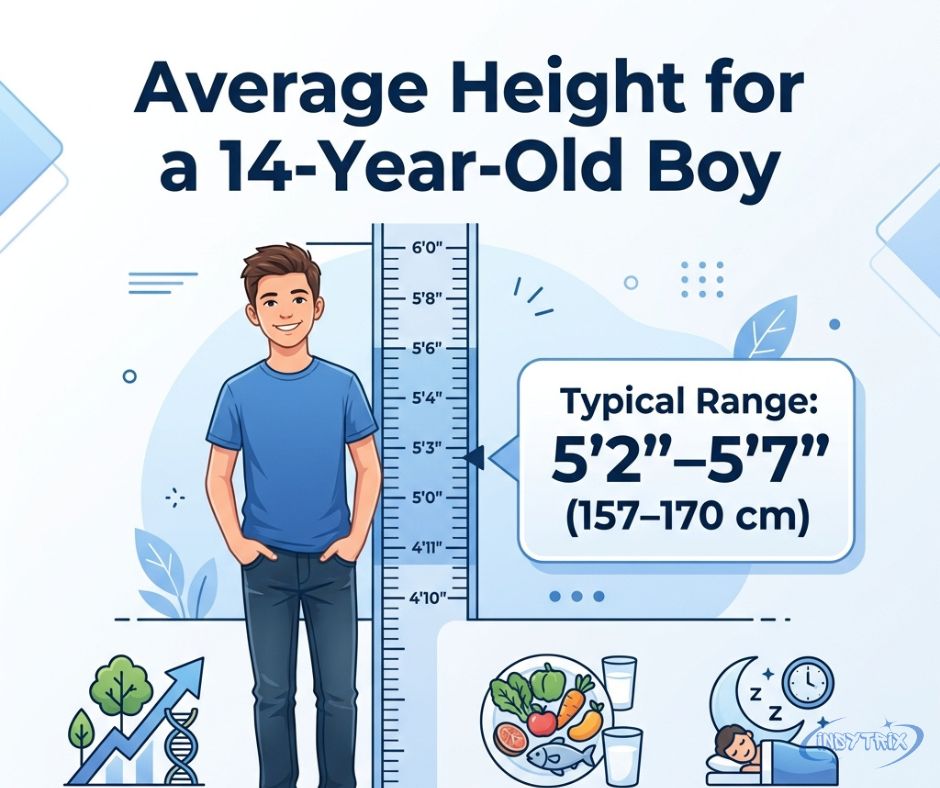
Average Height for a 14-Year-Old Boy: Is Your Son on Track?
You stood him against the wall this morning, marked the spot, then compared it to his classmates and felt that familiar knot of worry. Every parent of a teenage son eventually asks the same question: what is the average height for a 14-year-old boy, and where does mine actually fall? The honest answer involves more than one number.
It includes a full range, a growth curve that shifts year to year, and a puberty growth timeline that varies wildly from boy to boy. Some sons shoot up early. Others take their time. This guide breaks down real CDC growth chart for boys data, explains what “normal” truly means, and shows what still lies ahead during these fast-changing years.
What Is the Average Height and Weight for a 14-Year-Old Boy?
The average height for a 14-year-old boy in the United States sits close to 5’4″, or about 162 cm. Most boys this age fall somewhere between 5’2″ and 5’7″, and that spread is completely normal. Weight tends to track alongside height, usually landing between 100 and 130 pounds depending on build and timing of puberty.
Parents often search for a height percentile calculator hoping for a single magic number. The truth is simpler and more reassuring. A boy sitting below or above the midpoint isn’t behind or ahead. He’s simply on his own path, shaped by genetics, timing, and daily habits.
Average Height for 14-Year-Old Boys by Percentile
Doctors rely on the CDC growth chart for boys to track development over time, not just a single measurement. The percentile system shows where a boy stands compared to thousands of others his age, and it’s one of the most useful tools in pediatrician growth monitoring.
| Percentile | Height (inches) | Height (cm) |
| 3rd | 5’0″ | 152 cm |
| 10th | 5’2″ | 157 cm |
| 25th | 5’3″ | 160 cm |
| 50th (average) | 5’4″ | 162 cm |
| 75th | 5’6″ | 168 cm |
| 90th | 5’8″ | 172 cm |
| 97th | 5’10” | 178 cm |
A boy at the height percentile 50th mark is right at the statistical middle. That’s the definition of normal height for 14 year old boys, but the entire range from 3rd to 97th is considered healthy. What matters far more is a steady growth curve over the years, not a single point in time.
Average Weight for 14-Year-Old Boys: What’s Normal?

Weight varies just as much as height, and a teen boy weight chart should always be read alongside height rather than on its own. Doctors compare both figures together, since a tall boy naturally weighs more than a shorter one at the same age.
| Percentile | Weight (lbs) | Weight (kg) |
| 10th | 89 lbs | 40 kg |
| 25th | 99 lbs | 45 kg |
| 50th | 112 lbs | 51 kg |
| 75th | 128 lbs | 58 kg |
| 90th | 148 lbs | 67 kg |
A quick note on bone density and body composition: muscle and bone weigh more than fat, so two boys at the same height can show different weights and both be perfectly healthy. Adolescence brings rapid shifts in muscle mass, especially once puberty kicks into gear.
Height and Weight Chart for Boys Age 11 to 17
A full height and weight chart for boys helps parents see the bigger picture instead of fixating on one age. Growth doesn’t happen at a steady pace. It arrives in bursts, then slows, then jumps again.
| Age | Average Height | Average Weight |
| 11 | 4’10” (147 cm) | 82 lbs |
| 12 | 5’0″ (152 cm) | 92 lbs |
| 13 | 5’2″ (156 cm) | 102 lbs |
| 14 | 5’4″ (162 cm) | 112 lbs |
| 15 | 5’6″ (168 cm) | 123 lbs |
| 16 | 5’8″ (173 cm) | 134 lbs |
| 17 | 5’9″ (175 cm) | 142 lbs |
Notice the steep climb between age ranges (11–17, 14, 15–19), particularly from 13 to 15. This is the heart of adolescent growth patterns, when a boy might outgrow his shoes twice in a single school year.
Factors That Affect a Boy’s Growth at Age 14
Genetic height potential plays the largest role in how tall a boy eventually becomes, often estimated using the mid-parental height formula that averages both parents’ heights. But genetics alone doesn’t tell the whole story, and roughly a quarter of final height depends on outside factors.
Sleep quality, daily activity, and overall diet all shape boys development milestones age 14 in ways that add up over months and years. A boy who sleeps poorly or eats a narrow diet may not reach the upper end of his genetic range, even though his DNA had room for more. Small daily habits matter more than most parents realize.
Is My Son Behind or On Track? Signs to Watch For

Parents typing is my son growing normally into a search bar are usually looking for reassurance, and most of the time, that reassurance is warranted. A steady growth curve, consistent percentile over the years, and normal weight gain alongside height are the three biggest green flags a pediatrician looks for.
On the flip side, a sudden drop across percentile bands, no signs of puberty by 14, or a family history of growth hormone deficiency are reasons to dig deeper. One father put it plainly in a parenting forum: “It hurts my heart my son is small for his age. I don’t know what to say when he tells me he’s sad about it.” That worry is common, and it doesn’t mean something is wrong.
Puberty Growth Spurt: When Does It Start and End?
The puberty growth timeline for boys typically begins between ages 10 and 14, though the range stretches wider for some. Signs of puberty in boys include voice changes, body hair, and a noticeable jump in shoe size before height even catches up.
Peak height velocity, the fastest stretch of growth during the entire teenage growth spurt age window, usually lands between 13 and 15. Growth plates stay open until somewhere between 15 and 19, meaning a 14-year-old still has real runway left before his final adult height prediction settles into place.
When Should You Talk to a Doctor About Growth Concerns?
Most growth questions resolve with time and patience, but certain signs deserve a real conversation with a professional. Short stature in teenagers combined with no pubertal signs, or a diagnosis pattern resembling idiopathic short stature, is worth discussing with an endocrinologist rather than waiting it out alone.
Bring up why is my son short for his age at the next checkup if his percentile has dropped sharply or if both parents reached final height unusually late. A doctor can order a bone age X-ray, review the pediatric growth chart, and rule out growth hormone deficiency with a simple blood panel. Most families walk away with good news.
How to Support Healthy Growth Naturally
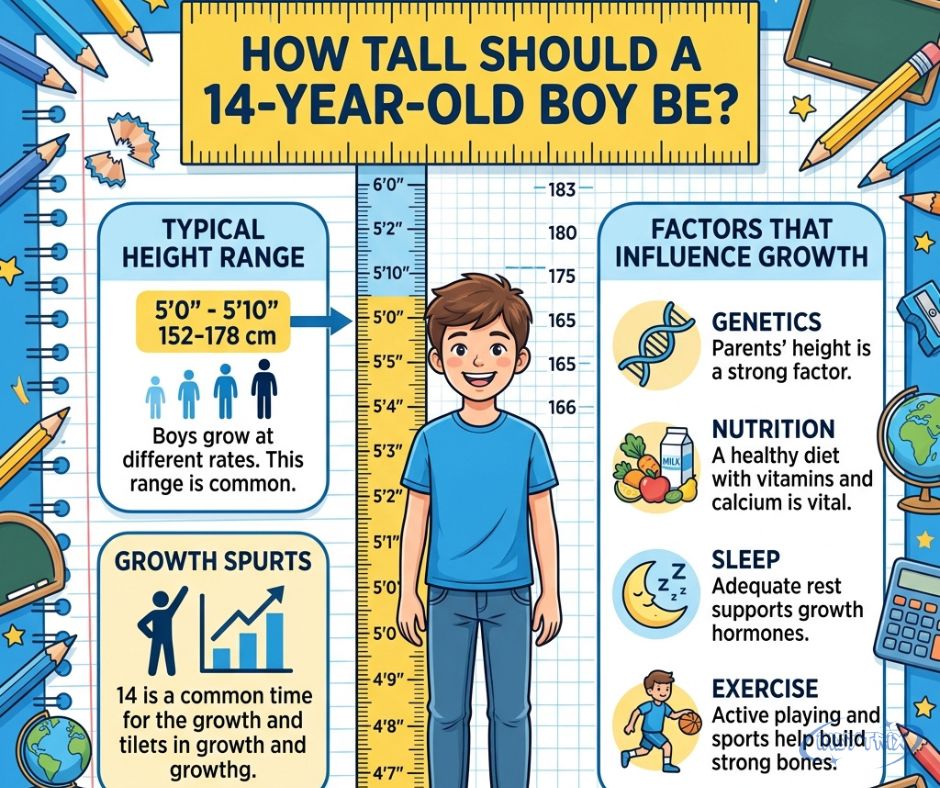
Nutrients for bone growth matter more during these years than almost any other stretch of childhood, since bones are actively lengthening and hardening at the same time. Calcium for bone growth sits at the top of the list, with the NIH Office of Dietary Supplements recommending 1,300 mg daily for boys aged 9 to 18, alongside 600 IU of vitamin D3 for teens to support calcium absorption.
Vitamin K2 MK-7 benefits include directing that calcium toward bones instead of soft tissue, while magnesium, zinc, and omega-3 for teenage boys round out a solid foundation. Zinc deficiency in kids is more common than most parents assume, especially among picky eaters, which is why a multivitamin for picky eaters can help close nutritional gaps. Add consistent weight-bearing exercise for teens and reliable rest, since sleep and growth hormone release are directly linked, and a diet for height growth starts to look complete.
Frequently Asked Questions
What size should a 14-year-old boy have?
Height typically ranges from 5’2″ to 5’7″, with the average around 5’4″.
What does a 14-year-old boy need?
Balanced nutrition (calcium, vitamin D, zinc), 8-10 hours of sleep, regular exercise, and routine pediatric checkups.
What happens at a 14-year-old physical boy?
The doctor checks height/weight percentiles, reviews puberty milestones, does a basic physical exam, and answers any growth or health questions.
The Bottom Line on Average Height for a 14-Year-Old Boy
The average height for teenage boys at 14 lands close to 5’4″, but the honest range spans several inches in either direction. A son who falls outside that midpoint isn’t behind or ahead. He’s simply following his own boys growth chart by age, shaped by genetics, timing, and the habits built into his daily routine.
Growth isn’t a race, and the number on the wall today won’t be the number in two years. Focus on consistent nutrition, solid sleep, and regular checkups, and let the growth curve tell the real story over time.

Welcome to Insytrix I’ m Habib Saleem, an AI-Powered SEO, and content writer with 3 years of experience.I help websites rank higher, grow traffic, and look amazing. My goal is to make SEO and web design simple and effective for everyone. Let’s achieve more together!














Post Comment