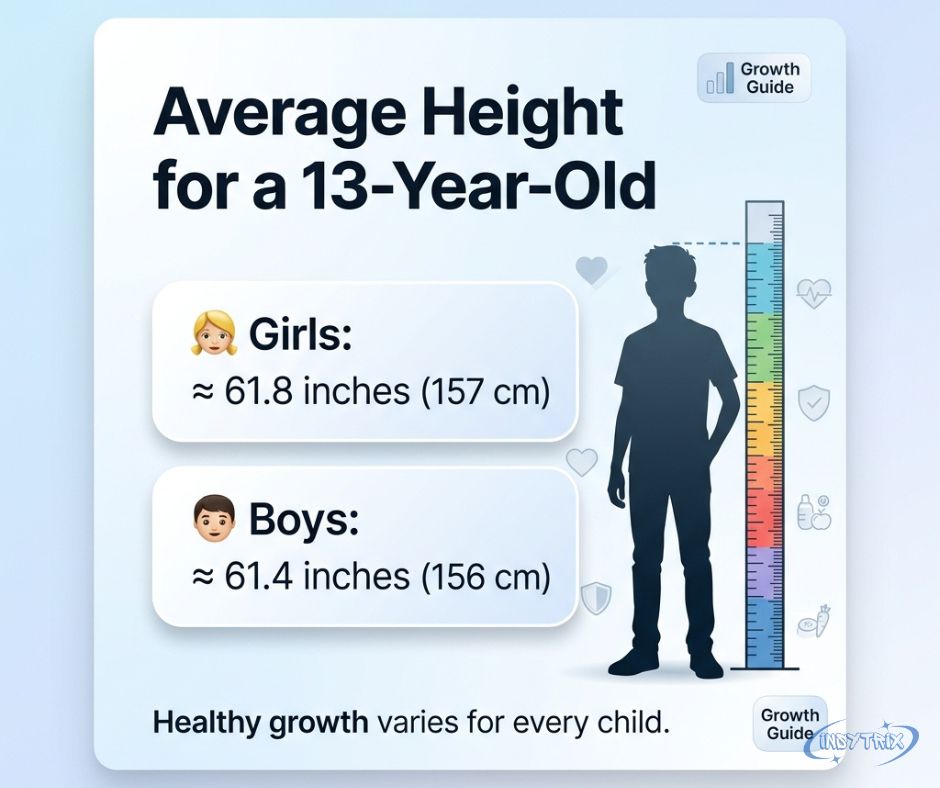
Average Height for a 13 Year Old: Growth Chart, Factors & Healthy Development
Understanding the Average Height for a 13 Year Old helps parents and teenagers track healthy growth with confidence. At age 13, puberty causes rapid physical changes, so height can vary widely from one child to another. The average height for a 13 year old girl and boys depends on genetics, nutrition, sleep, and overall health rather than a single standard.
Doctors often use a girls growth chart, average height by age, and growth percentiles to monitor progress instead of comparing children with classmates. Knowing the normal height for a 13 year old girl and the expected height at age 13 helps you understand whether growth is following a healthy and natural pattern while supporting long-term development.
What Is the Average Height for a 13 Year Old Girl?
The average height for a 13 year old girl in the United States is about 5 feet 1½ inches to 5 feet 2 inches (156–157 cm) according to commonly used pediatric growth references. This means the typical 13 year old girl height in feet falls just above five feet, while the average 13 year old girl height in cm is around 157 centimeters. Even so, every child grows differently. Some girls may be a few inches shorter or taller and still fall within a healthy range. Doctors look at long-term growth rather than one measurement because adolescent growth rarely happens at the same speed for every child.
Height should never be judged by comparison alone because the normal height for a 13 year old girl covers a wide range. Many healthy girls measure below or above the average because of their family height history, overall growth potential, and childhood development. During female puberty, the body experiences rapid physical changes that can temporarily make one teenager much taller than another. A steady growth pattern is usually a stronger sign of health than trying to match the exact average height of a 13-year-old girl.
| Age | Average Height (Feet/Inches) | Average Height (Centimeters) |
| 13-Year-Old Girl | 5’1½”–5’2″ | 156–157 cm |
| 13-Year-Old Boy | 5’1″ | 155 cm |
Average Height Chart for 13-Year-Old Girls
A girls growth chart provides much more useful information than a single average height. Pediatricians compare measurements using a teen height chart to understand where a child falls among others of the same age. The chart below gives an approximate guide based on commonly used growth references. These numbers may vary slightly depending on the reference source and the child’s background, yet they provide an excellent starting point for understanding average height by age.
| Percentile | Height (cm) | Height (Feet/Inches) |
| 5th | 148 cm | 4’10” |
| 10th | 150 cm | 4’11” |
| 25th | 153 cm | 5’0″ |
| 50th | 157 cm | 5’2″ |
| 75th | 160 cm | 5’3″ |
| 90th | 163 cm | 5’4″ |
| 95th | 165 cm | 5’5″ |
Average Height for a 13 Year Old Girl Compared to Boys
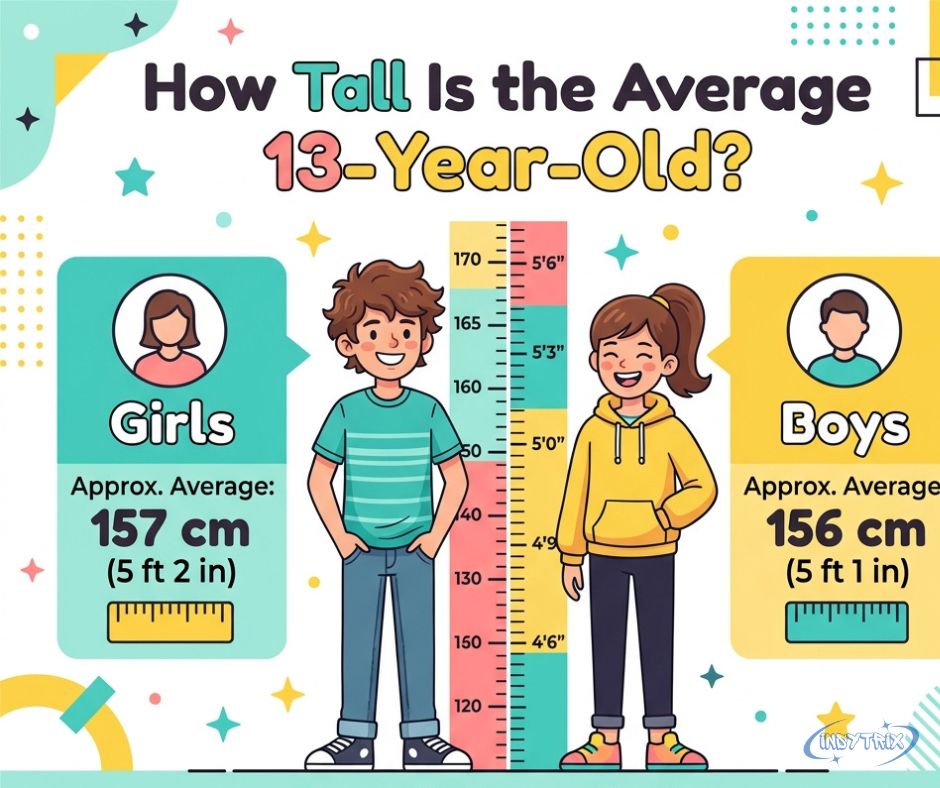
The average height for a 13 year old girl is usually slightly greater than that of a 13-year-old boy because girls often enter puberty earlier. The average height of teenage girls reaches around 157 cm, while boys average about 155 cm at the same age. This small difference surprises many parents, yet it reflects normal adolescent growth spurt patterns rather than unusual development.
| Comparison | Girls | Boys |
| Average Height | 157 cm | 155 cm |
| Height in Feet | 5’2″ | 5’1″ |
| Typical Puberty Start | 10–11 Years | 11–12 Years |
These averages change quickly because boys generally continue growing for a longer period. During the later teenage years, increased growth hormone activity and longer-lasting bone development often allow boys to become taller than girls.
What Affects the Height of a 13-Year-Old Girl?
The strongest influence on height is genetic factors. A child’s genes determine much of their natural growth potential, which means tall parents often have taller children, while shorter parents may have children who are naturally shorter. Even so, genetics does not guarantee an exact height. Doctors often look at family height history to estimate a child’s possible adult height, but they also consider yearly growth, overall health, and puberty timing before making any predictions.
Genes work like a blueprint rather than a fixed rule. Two sisters raised in the same home can still grow to different heights because every child inherits a unique mix of genetic traits. This is why the average height for a 13 year old girl is only a guide and not a target that every teenager must reach. Healthy growth is about following a consistent pattern instead of matching one specific number.
Nutrition and Healthy Bone Growth
Food provides the building blocks for bone development, muscles, and healthy organs. During adolescence, the body needs more energy than ever before because rapid growth places extra demands on every system. A diet rich in protein intake, calcium, vitamin D, zinc, and magnesium supports stronger bones and helps teenagers reach their natural height potential. These nutrients work together to build healthy bones and maintain healthy body functions throughout puberty.
Healthy eating is about balance rather than eating large amounts of one food. Dairy products, lean meats, eggs, fish, beans, fruits, vegetables, nuts, and whole grains all contribute to balanced nutrition and healthy eating habits. Poor nutrition over a long period may slow normal growth, while a varied diet gives the body everything it needs for steady growth and development.
| Nutrient | Main Benefit | Common Food Sources |
| Protein intake | Builds muscles and tissues | Eggs, chicken, fish, beans |
| Calcium | Strengthens bones | Milk, yogurt, cheese |
| Vitamin D | Helps absorb calcium | Salmon, fortified milk, sunlight |
| Zinc | Supports growth and immunity | Beef, beans, nuts |
| Magnesium | Supports muscles and bones | Seeds, spinach, almonds |
Growth Spurts During Puberty
One of the most exciting stages of adolescence is the adolescent growth spurt. Most girls begin growing rapidly between ages 10 and 14, although the exact timing differs for every child. During this period, several inches of height may be gained within one or two years. This rapid increase happens because the body produces more hormones that speed up body development and bone growth.
The timing of growth varies widely. Some girls begin puberty at age nine, while others may not notice major changes until age twelve or thirteen. Both situations can be perfectly healthy. The average height for a 13 year old girl reflects thousands of children, but individual growth always follows a unique schedule.
Common Signs of a Growth Spurt
A growth spurt affects much more than height. Many teenagers suddenly notice larger shoes, longer legs, bigger hands, and clothes that no longer fit. Increased appetite is also common because the body requires more energy during rapid growth. Temporary clumsiness sometimes appears because the brain needs time to adjust to changing body proportions.
Parents may also notice changes in posture, shoulder width, and overall appearance. These are natural parts of puberty growth and usually happen gradually over several months. Every teenager experiences these changes differently, so comparing siblings or classmates rarely provides useful information.
Typical Growth Timeline
| Age | Growth Stage |
| 10–11 Years | Early puberty begins |
| 11–13 Years | Fastest height growth |
| 13–15 Years | Growth gradually slows |
| 15–16 Years | Near adult height |
| 16–18 Years | Growth usually complete |
Is Your 13-Year-Old Girl’s Height Normal?
Parents often ask whether their daughter is growing normally. The answer depends on much more than one measurement. The normal height for a 13 year old girl falls within a broad healthy range because children inherit different genes and enter puberty at different ages. Doctors compare measurements with the CDC growth chart, evaluate yearly progress, and review overall health before deciding whether growth is typical.
The average height of a 13-year-old girl is useful as a reference, but a healthy child may naturally be taller or shorter. What matters most is maintaining a steady height percentile for girls over time. A girl who consistently follows the same growth curve is usually developing normally, even if she is not close to the national average.
How to Support Healthy Height Growth
Healthy growth begins with everyday meals. During the teenage years, the body needs extra energy because bones, muscles, and organs are developing quickly. A diet rich in balanced nutrition provides the vitamins and minerals required for healthy teenage development. Foods containing protein intake, calcium, vitamin D, zinc, and magnesium help build stronger bones and support normal growth. Although no single food can make someone taller overnight, eating a wide variety of nutritious foods allows the body to reach its natural height potential.
Parents should encourage regular meals instead of relying on processed snacks or sugary drinks. Dairy products, eggs, fish, lean meats, beans, leafy vegetables, fruits, whole grains, and nuts all contribute to healthy eating habits and long-term bone health. Drinking enough water also supports normal body functions and helps active teenagers stay healthy throughout puberty.
| Food | Main Nutrient | Benefit |
| Milk & Yogurt | Calcium, Vitamin D | Supports strong bones |
| Eggs | Protein intake | Builds muscles and tissues |
| Salmon | Vitamin D, Protein | Helps bone growth |
| Beans | Protein, Magnesium | Supports muscle development |
| Spinach | Magnesium, Iron | Supports healthy cells |
| Almonds | Healthy fats, Calcium | Strengthens bones |
| Fruits | Vitamins | Supports immunity |
| Vegetables | Minerals | Encourages healthy development |
Average Height by Age for Girls (10–18 Years)
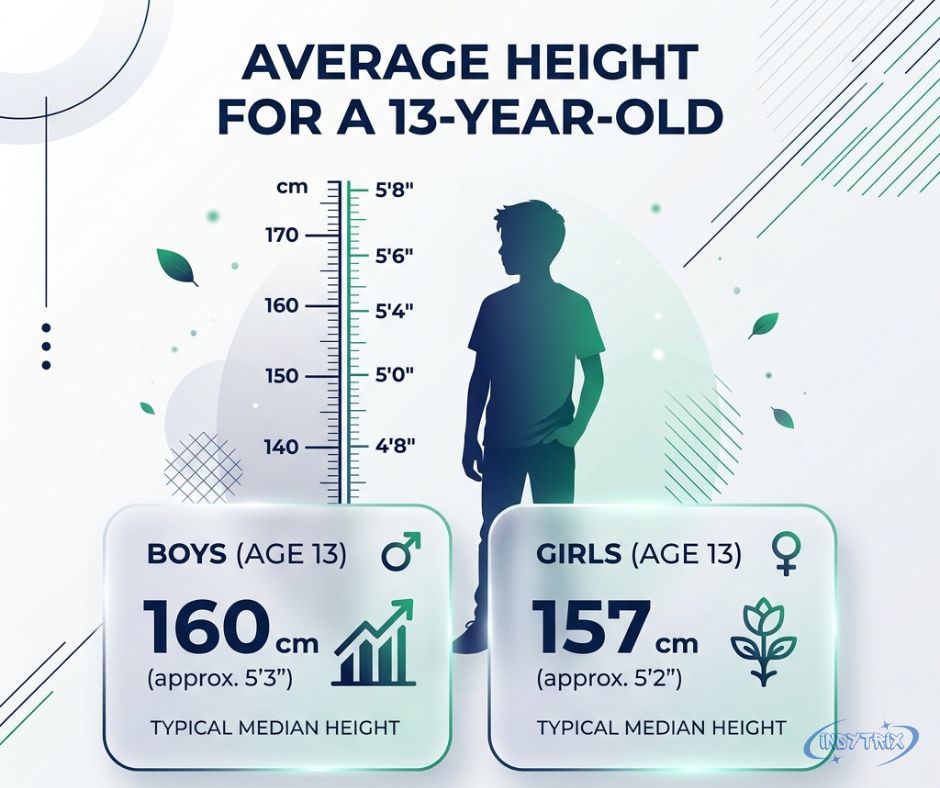
Height changes rapidly throughout adolescence because every stage of puberty brings new physical development. The table below shows the approximate average height by age for girls in the United States. These values represent averages, so many healthy teenagers naturally fall above or below them.
| Age | Average Height (cm) | Average Height (Feet/Inches) |
| 10 | 138 cm | 4’6″ |
| 11 | 145 cm | 4’9″ |
| 12 | 151 cm | 4’11½” |
| 13 | 157 cm | 5’2″ |
| 14 | 160 cm | 5’3″ |
| 15 | 162 cm | 5’4″ |
| 16 | 163 cm | 5’4¼” |
| 17 | 163 cm | 5’4¼” |
| 18 | 163 cm | 5’4¼” |
This table illustrates how most girls experience their fastest growth before age fourteen. After that point, height increases become smaller because skeletal maturity gradually approaches. Individual growth still varies depending on genetic factors, health, and puberty timing.
Understanding Growth Patterns From Ages 10 to 18
Growth is rarely perfectly steady. One girl may grow four inches in a single year, while another grows slowly over several years before reaching the same adult height. These differences are normal because puberty stages, hormones, and genetics differ for every child.
Doctors evaluate growth by reviewing several years of measurements instead of focusing on one birthday. A consistent pattern on a girls growth chart provides much more useful information than comparing a child with classmates. This approach helps parents understand expected height at age 13 while recognizing that healthy growth comes in many different patterns.
Common Myths About Height Growth
Does Stretching Make You Taller?
Stretching improves flexibility, posture, and muscle health, but it does not permanently lengthen bones. Many people appear slightly taller after improving posture because the spine becomes more aligned. However, stretching cannot change a person’s genetic height.
Does Drinking More Milk Increase Height?
Milk is an excellent source of calcium and protein, making it valuable for healthy bones. Even so, drinking extra milk alone will not increase height beyond a child’s inherited potential. Height depends on nutrition as a whole rather than one food.
Can Exercise Increase Height?
Exercise supports strong muscles, healthy bones, and good posture. Sports also encourage confidence and better overall fitness. However, physical activity does not permanently increase bone length after genetics has determined a person’s natural growth potential.
Can You Grow Taller After Puberty?
Most girls stop growing once the growth plates close and skeletal maturity is reached. This usually happens between ages 15 and 16. After the growth plates close, gaining additional height naturally becomes extremely unlikely.
| Myth | Reality |
| Stretching increases height | Improves posture only |
| Milk makes you much taller | Supports bone health but cannot change genetics |
| Supplements guarantee height gain | No scientific proof for healthy teens |
| Sports make bones longer | Improve fitness and posture, not bone length |
| Everyone grows until age 20 | Most girls stop growing around 15–16 years |
Frequently Asked Questions
What is the normal height for a 13-year-old girl?
The normal height for a 13 year old girl usually falls between about 148 cm and 165 cm, with the average close to 157 cm. Doctors use a CDC growth chart to evaluate healthy growth rather than one fixed number.
Is 5 feet tall good for a 13-year-old girl?
Yes. A height of 5 feet is considered healthy for many 13-year-old girls. It falls within a normal growth range, especially when growth follows a steady percentile over time.
How tall should a 13-year-old girl be in cm?
The 13 year old girl height in cm averages around 157 centimeters in the United States. Individual differences remain completely normal because genetics and puberty timing vary.
When do girls stop growing?
Most girls finish growing between ages 15 and 16 after their growth plates close. Small differences may occur, but major height increases usually end by this stage.
What foods help increase height?
No food can guarantee extra height. A diet rich in protein intake, calcium, vitamin D, fruits, vegetables, whole grains, fish, dairy products, and lean meats supports healthy growth and allows the body to reach its natural height potential.
Conclusion
Understanding the Average Height for a 13 Year Old helps parents and teenagers view growth with realistic expectations instead of unnecessary worry. The average height for a 13 year old girl provides a helpful reference, yet healthy growth always varies from one child to another. Genetics, nutrition, sleep, exercise, hormones, and overall health all work together to shape a teenager’s development. Monitoring progress with a girls growth chart and trusted tools such as the CDC growth chart offers a far more accurate picture than comparing children with friends or classmates.
Healthy growth is a journey rather than a race. A balanced diet, regular physical activity, enough sleep, and routine medical checkups give teenagers the best opportunity to reach their natural final adult height. If growth patterns suddenly change or concerns arise, speaking with a pediatrician is the safest way to ensure continued healthy development.

Welcome to Insytrix I’ m Habib Saleem, an AI-Powered SEO, and content writer with 3 years of experience.I help websites rank higher, grow traffic, and look amazing. My goal is to make SEO and web design simple and effective for everyone. Let’s achieve more together!














Post Comment