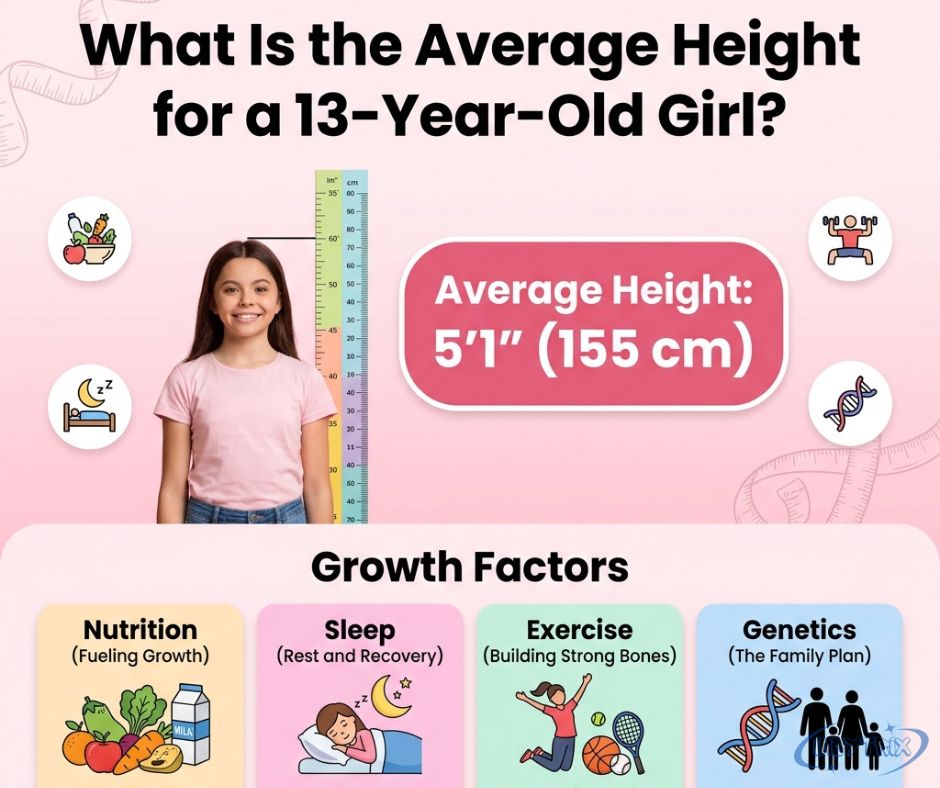
What Is the Average Height for a 13 Year Old Girl? Complete Growth Guide
Growing during the teenage years feels different for every child. Some girls seem to grow several inches in one year while others grow more slowly. That difference often makes parents wonder whether their daughter is developing normally. Understanding What Is the Average Height for a 13 Year Old Girl helps you compare growth using trusted medical standards instead of guesswork. However, height is only one part of healthy development because every child follows a unique journey influenced by genetics, lifestyle, and overall health.
This complete guide explains the average height for a 13 year old, how doctors use the CDC growth chart, what growth percentiles really mean, and why healthy habits matter more than chasing a certain number. You will also learn about teenage girl growth, puberty growth spurt, nutrition, and the best ways to support healthy physical development. By the end, you will understand what is considered normal and when it may be helpful to speak with a pediatrician.
What Is the Average Height for a 13 Year Old Girl?
The answer to What Is the Average Height for a 13 Year Old Girl depends on age in months because children continue growing throughout the year. According to the CDC stature-for-age chart, the average 13 year old girl height at the 50th percentile is about 5 feet 1½ to 5 feet 2 inches (156–157 cm). This average height in feet and cm represents the middle point where half of girls are taller and half are shorter. Most healthy girls fall within a broad healthy height range, making individual differences completely normal.
Height should never be judged by one number alone. Doctors focus on whether a child follows a steady normal growth pattern rather than comparing classmates. A girl who has always been shorter because of family history may still experience perfectly healthy adolescent growth. Likewise, a taller girl may simply inherit that trait naturally. Healthy development depends on many factors working together throughout adolescence.
Average Height Table for 13-Year-Old Girls
The table below shows the general reference values commonly used in the United States. These figures come from the CDC growth chart and provide an easy comparison for parents.
| Percentile | Height (Feet & Inches) | Height (Centimeters) |
| 5th | 4’10” | 147 cm |
| 25th | 5’0″ | 152 cm |
| 50th | 5’2″ | 157 cm |
| 75th | 5’4″ | 162 cm |
| 95th | 5’6″ | 168 cm |
These numbers are only reference points. A girl’s height percentile changes naturally as she grows. Doctors pay more attention to growth monitoring, height tracking, and yearly progress than one single measurement. Consistent growth usually shows healthy human growth and proper body development.
Average Height for a 13-Year-Old Girl Around the World
The average height for girls is not exactly the same everywhere. In the United States, Canada, and many European countries, girls are often slightly taller because of excellent healthcare, balanced nutrition, and improved living conditions. Some Asian and developing countries report a slightly lower expected height at age 13, although the gap continues to become smaller as healthcare improves worldwide.
These differences should never cause concern because geography alone does not determine height. Every population has unique genetic backgrounds and environmental influences. Comparing your daughter with children from another country provides little value. Instead, doctors recommend using the WHO growth standards, WHO growth charts, or local medical references that match your child’s background and age.
Why Height Varies Across the World
Many factors explain why one country may have taller teenagers than another. The biggest influence remains genetics, yet proper nutrition, access to healthcare, clean living environments, and regular physical activity also contribute significantly. A child who enjoys a balanced diet rich in protein, calcium, vitamin D, zinc, and magnesium has a better opportunity to reach her natural height potential.
Economic conditions also affect child development. Children with regular medical care, vaccinations, and healthy food supplies generally experience healthier skeletal growth and stronger bone development. These advantages help support normal growth velocity throughout childhood without changing a person’s inherited potential.
Understanding Growth Percentiles and Height Charts
Parents often hear doctors mention growth percentiles, but the term sounds more complicated than it really is. A percentile simply compares your child’s height with other girls of the same age. For example, a girl in the 50th percentile ranking is close to the average, while one in the 75th percentile is taller than most girls her age. Neither result is better because both can represent healthy growth.
Doctors care more about consistency than ranking. A girl who remains around the same girls height percentile every year usually follows a healthy normal growth pattern. Sudden changes may encourage further medical evaluation, especially if they occur alongside other developmental concerns. Regular height measurement allows these patterns to become clear over time.
How to Read a CDC Growth Chart
A child growth chart displays age along one side and height along the other. When doctors record each visit, they plot the child’s measurement to create a growth curve. This process helps identify whether teen height development continues steadily throughout childhood and the teenage years.
Rather than focusing on one visit, healthcare providers examine the entire curve. Stable progress often indicates healthy growth hormone activity, proper bone health, and normal developmental milestones. Consistent records also improve height prediction, giving families a better understanding of potential final adult height while recognizing that every child develops at her own pace.
Puberty and Growth During Age 13
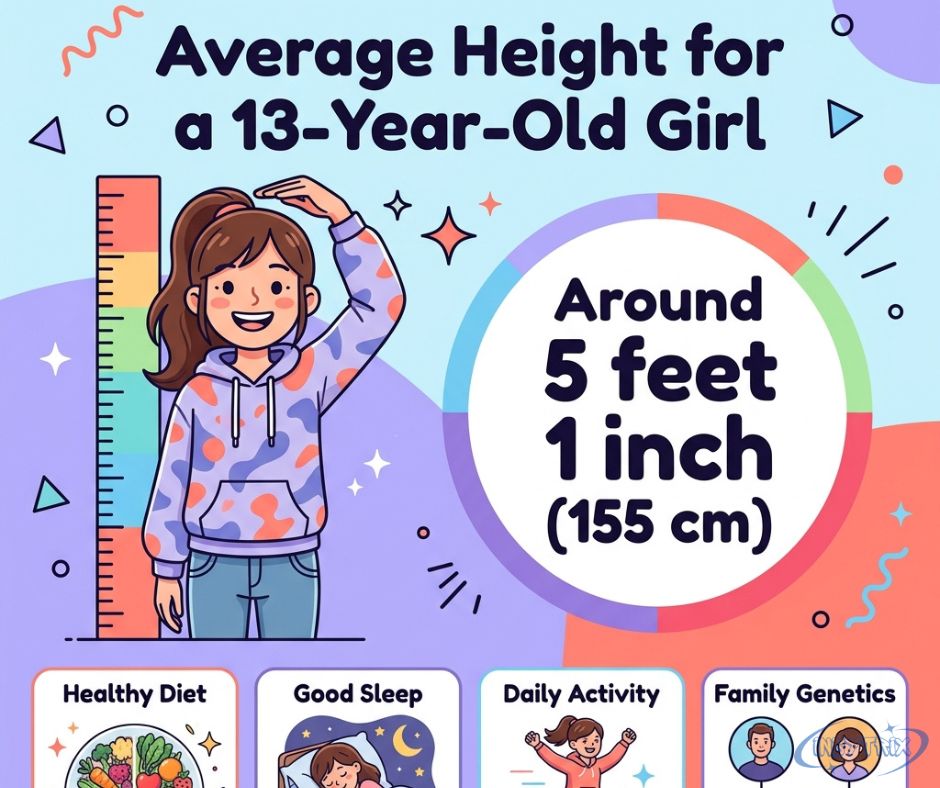
One reason What Is the Average Height for a 13 Year Old Girl receives so many searches is because age thirteen often falls during puberty. During this stage, the body experiences rapid hormonal changes driven mainly by estrogen and growth hormone. These changes trigger a remarkable growth spurt, allowing girls to gain several inches over a relatively short period.
The timing of early puberty varies greatly between children. Some girls begin growing rapidly around age ten while others develop later. Both patterns can be perfectly healthy. Doctors evaluate overall teenage development, not simply height alone, because each stage of maturation follows its own natural schedule.
When Girls Usually Stop Growing
Most girls continue growing after age 13, although the speed gradually slows. Growth usually continues for one to three years after the first menstrual period until the growth plates slowly close. Once these plates finish developing, height increases become very small or stop completely.
Healthy growth during these years depends on maintaining a healthy lifestyle that includes quality sleep, nutritious meals, and regular exercise. Supporting the body during this important stage helps maximize natural growth potential without relying on unrealistic products or myths that promise extra height.
Factors That Affect the Height of a 13-Year-Old Girl
If you wonder why two girls of the same age have different heights, the answer often begins with genetics. Experts estimate that inherited traits determine about 80% of a person’s height. Your daughter’s inherited height depends largely on her parents and close relatives. This explains why some children naturally become taller while others remain shorter despite following similar routines.
Although family history plays the biggest role, it does not tell the whole story. Doctors use several methods of height prediction to estimate future growth, yet these estimates are never exact. Healthy adolescent growth follows individual patterns, which means your daughter may experience changes at a different pace than friends or classmates.
Lifestyle Factors That Influence Growth
Daily habits have a powerful impact on healthy growth. A nutritious eating plan filled with protein, calcium, vitamin D, zinc, and magnesium supports strong bone development throughout the teenage years. Good nutrition also helps maintain steady growth velocity, especially during periods of rapid development.
Quality healthy sleep is equally important because the body releases most growth hormone while sleeping. Regular physical activity, outdoor play, and consistent exercise strengthen muscles and bones while supporting overall bone health. Together, these habits encourage healthy human growth and improve overall well-being during teenage development.
Medical Conditions That Can Affect Height
Most girls grow normally without medical concerns. However, certain health conditions can affect 13 year old girl height and slow development. Problems involving the thyroid gland, hormone production, or a chronic illness may reduce the body’s ability to maintain a healthy growth pattern.
Doctors also consider conditions such as delayed puberty or unusually early puberty when evaluating growth. If your daughter’s height changes suddenly or stops increasing for a long period, a medical evaluation may be recommended. In some cases, a pediatrician may refer you to a pediatric endocrinologist for further testing and expert guidance.
Average Height of 13-Year-Old Girls vs Boys
Many parents notice that girls often seem taller than boys during middle school. This observation is completely normal. Around age 13, girls usually experience their puberty growth spurt earlier, allowing them to temporarily become taller than boys of the same age.
| Age | Average Girl Height | Average Boy Height |
| 13 Years | 5 ft 2 in (157 cm) | 5 ft 1 in (156 cm) |
This height comparison by age shows only a small difference, yet it reflects different stages of body development rather than permanent height. Most boys continue growing for a longer period, which often leads to a taller final adult height.
Is My 13-Year-Old Girl Too Short or Too Tall?
Many parents worry when their daughter looks shorter or taller than classmates. In reality, a wide healthy height range exists for every age. The normal height for a 13 year old girl depends on genetics, health, nutrition, and the timing of puberty, making comparisons with friends less meaningful.
Doctors focus on long-term growth monitoring instead of one single measurement. A girl who consistently follows her own height percentile usually develops normally, even if she is above or below the average. Steady progress matters far more than reaching a specific number on a chart.
How to Support Healthy Growth Naturally
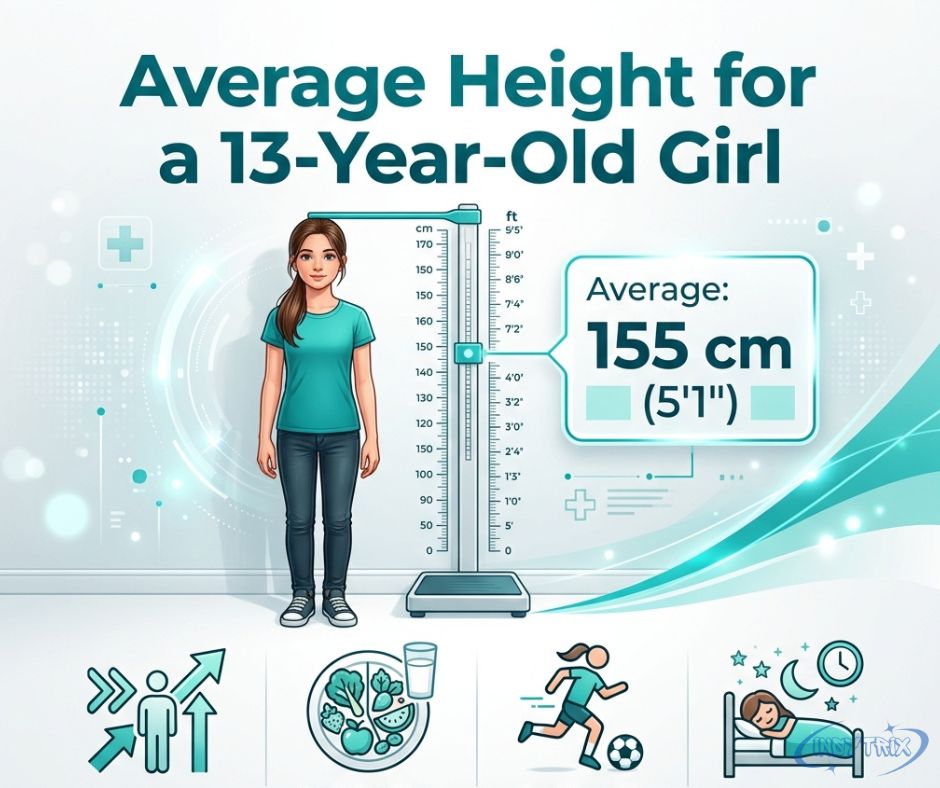
Healthy eating gives the body the building blocks needed for strong bones and steady growth. A balanced diet filled with protein, calcium, vitamin D, zinc, and magnesium supports healthy muscles, bones, and tissues. Fresh fruits, vegetables, dairy products, lean meat, fish, eggs, beans, nuts, and whole grains provide essential nutrients that encourage normal teen height development and long-term bone health.
Proper hydration also plays an important role in healthy growth. Drinking enough water helps transport nutrients throughout the body and supports every stage of body development. Although no food can suddenly make someone taller, healthy eating allows the body to reach its natural growth potential while reducing the risk of nutritional deficiencies during adolescence.
How to Measure and Track Height Correctly
Accurate height measurement begins with a flat floor and a wall without carpet or baseboards. Ask your daughter to stand straight with her heels together, shoulders relaxed, and eyes looking forward. Use a flat object such as a book to mark the highest point of the head before measuring from the floor.
Measuring height every three to six months provides a clearer picture than checking every few weeks. Small changes are often difficult to notice over short periods. Consistent height tracking allows parents to monitor annual growth rate and compare progress using a reliable 13 year old growth chart or height chart for girls.
Frequently Asked Questions
What is considered a normal height for a 13-year-old girl?
The normal height for a 13 year old girl is usually around 5 feet 2 inches (157 cm) according to the CDC stature-for-age chart. However, healthy girls may naturally fall above or below this average depending on genetics, nutrition, and the timing of puberty.
Can a 13-year-old girl still grow taller?
Yes. Most girls continue growing after age 13. Growth often continues for one to three years after the first menstrual period until the growth plates close. Healthy habits and proper nutrition support this natural process.
How many inches does a girl usually grow after age 13?
Many girls grow another 1 to 3 inches (2.5 to 7.5 cm) after turning 13, although this varies greatly. The amount depends on growth velocity, early puberty, genetics, and overall health during the remaining years of development.
Does early puberty affect final height?
Yes. Early puberty usually causes children to grow faster at first. However, the growth plates may close sooner, which can reduce final adult height compared with children who begin puberty later. Every child develops differently, so medical advice should be based on individual growth patterns.
What foods help increase healthy growth?
Foods rich in protein, calcium, vitamin D, zinc, and magnesium support healthy bone and muscle development. Dairy products, eggs, fish, lean meat, beans, fruits, vegetables, and whole grains provide the nutrients needed for steady growth and lifelong bone health.
Conclusion
Understanding What Is the Average Height for a 13 Year Old Girl helps parents view growth with confidence instead of concern. The average height is only a guideline because every child follows a unique path shaped by genetics, nutrition, sleep, physical activity, and overall health. A steady normal growth pattern matters much more than reaching a specific number on a chart.
Using trusted resources such as the CDC growth chart, WHO growth standards, and regular checkups with a pediatrician helps ensure healthy development. Encourage nutritious meals, daily exercise, good sleep, and consistent height tracking throughout the teenage years. With the right support, most girls naturally achieve their healthiest growth and move confidently toward adulthood.

Welcome to Insytrix I’ m Habib Saleem, an AI-Powered SEO, and content writer with 3 years of experience.I help websites rank higher, grow traffic, and look amazing. My goal is to make SEO and web design simple and effective for everyone. Let’s achieve more together!














Post Comment